
Remember His Name: Mashal Khan, the "Intellectually Curious"
Student Slain by a Fabricated Blasphemy Mob
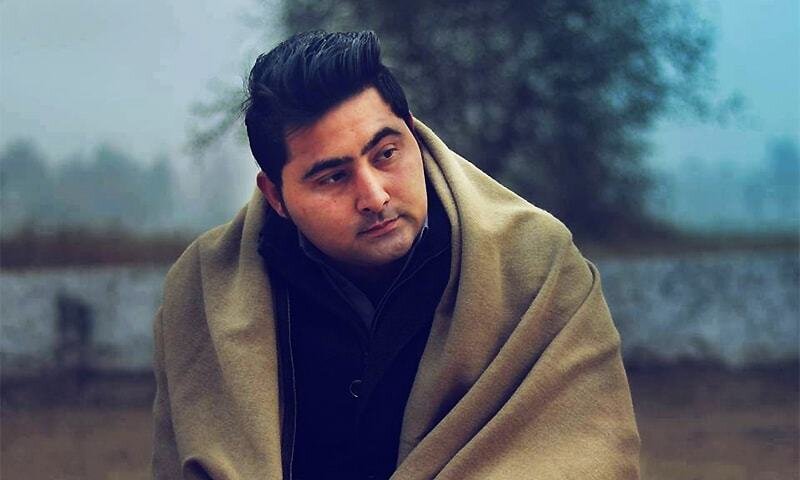
MARDAN, PAKISTAN — The hostel room of Mashal Khan, a journalism student at Abdul Wali Khan University, stands as a frozen testament to a young life defined by critical thinking. Posters of Karl Marx and Che Guevara still hang from the walls. Among the scribbled quotes on his wall, one poignant directive captures his spirit: “Be curious, crazy and mad.”
But in an environment where questions are treated as crimes, Mashal’s intellectual curiosity cost him his life.
Following a heated debate over religion in his university dormitory, rumors were intentionally spread accusing Mashal of blasphemy. Within hours, a mob of several hundred people—fueled by unchecked religious frenzy—kicked down his door, dragged him from his room, and brutally beat him to death.
Silenced for Asking Questions
Those who knew Mashal closely rubbished the blasphemy allegations, describing him instead as a dedicated, questioning intellectual who openly professed his devotion to Islam but refused to accept blind dogma.
“Whatever he had to say, he would say it openly,” said one of his university professors, speaking on the condition of anonymity out of fear for their own life. “But he didn’t understand the environment he was living in.”
Following an initial investigation, local police confirmed they arrested 20 suspects and found absolutely no evidence to substantiate the blasphemy allegations against Mashal. It was a targeted, fabricated hit to silence a progressive voice.
Systemic Failure and Police Inaction
The tragedy highlights a deeply concerning pattern of state and law enforcement failure in Pakistan. According to Rehman, the hostel’s caretaker, Mashal was still alive when the police arrived on campus. However, officers allegedly stood by and watched the horror unfold.
“They could have easily saved his life but they stood away from the mob,” Rehman stated, adding that he overheard an officer chillingly remark that it was “good” the student was being killed. While Mardan police chief Mohammad Alam Shinwari denied these allegations, claiming Mashal was already dead when they entered, the culture of police appeasement toward violent mobs remains a systemic crisis.
The state’s failure to protect its citizens from vigilante violence is further compounded by political rhetoric. Prior to the incident, state officials had ramped up rhetoric targeting online expression, ordering “strict punishment” for unorthodox views—an executive stance that critics argue effectively greenlights vigilante mobs.
Cruelty Beyond the Grave
The injustice did not end with Mashal’s murder; it followed him to his grave. In his hometown of Swabi, the local mosque’s imam openly refused to read Mashal’s last rites (Namaz-e-Janaza), forcing a local technician to step in. The technician was subsequently confronted and threatened by aggressive community members for performing the funeral.
Mashal’s father, Iqbal Shaer—a local poet and small business owner who always encouraged his children to appreciate literature, poetry, and the arts—expressed the agonizing grief of a progressive family targeted by right-wing extremism.
“First they killed my son and now they are adding salt to our wounds,” Shaer said. “My wife told me this morning that she spent her life taking care of her son, but those who killed him have wasted that long struggle.”
The Lethal Cost of Blasphemy Laws
Mashal Khan is far from the first victim of Pakistan’s draconian blasphemy laws, which carry penalties up to the death sentence. According to data compiled by the Center for Research and Security Studies, at least 65 people have been murdered in extrajudicial, vigilante killings over blasphemy allegations since 1990. Dozens more remain on death row.
Mashal’s murder is a stark reminder of what happens when a state capitulates to extremism, allowing weaponized allegations to serve as judge, jury, and executioner. For human rights defenders and the team at Justice Forth, Mashal’s death cannot just be another statistic. It must be a rallying cry for the immediate protection of student free speech, the prosecution of mob orchestrators, and a total overhaul of the laws that enable vigilante murder.
Recent Posts
Archives
Today Date
| M | T | W | T | F | S | S |
|---|---|---|---|---|---|---|
| 1 | 2 | 3 | 4 | 5 | ||
| 6 | 7 | 8 | 9 | 10 | 11 | 12 |
| 13 | 14 | 15 | 16 | 17 | 18 | 19 |
| 20 | 21 | 22 | 23 | 24 | 25 | 26 |
| 27 | 28 | 29 | 30 | 31 | ||