
The Cruel Irony of H-9 Islamabad
25,000 Christians Face Forced Eviction in Islamabad Slum Clearances
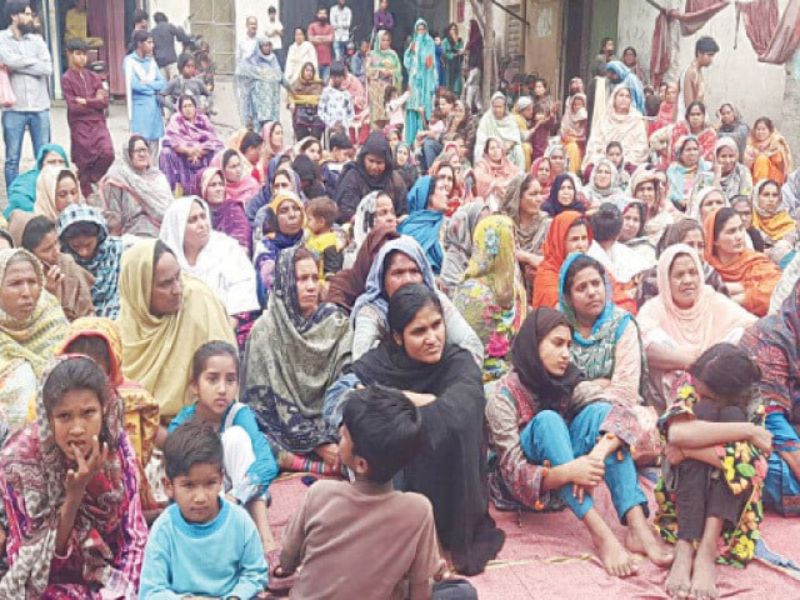
ISLAMABAD, PAKISTAN — A sweeping “anti-encroachment” campaign launched by Islamabad’s Capital Development Authority (CDA) has placed an estimated 25,000 working-class Christians at imminent risk of forced eviction. The municipal directive, which orders residents to vacate their homes and shops in the H-9 sector’s Rimsha and Akram Gill colonies, has ignited widespread panic and protests among a community that has spent over a decade building their lives under explicit government directives.
The state’s current effort to reclaim municipal land for development highlights a devastating blind spot in urban planning: the absolute disregard for national housing laws, supreme court mandates, and the safety of religious minorities.
A Legacy Born of Displacement
The crisis facing Rimsha Colony carries a profound and painful irony. The settlement was originally established in the early 2010s with the direct cooperation of state authorities following the infamous blasphemy case of Rimsha Masih—a 14-year-old Christian girl with a mental disability who was falsely accused of burning pages of the Quran.
When mob violence threatened the wider Christian population in the Mehrabadi area, hundreds of families fled overnight for their lives. Government agencies subsequently permitted these displaced families to set up temporary shelters in the H-9 sector. Over the past fifteen years, those tents evolved into permanent brick structures, complete with informal schools, close-knit neighborhoods, and local churches.
Now, the same civic body that relocated these vulnerable citizens is labeling their homes “illegal” and ordering their destruction.
Violating the Law to Enforce the Law
Human rights monitors and legal advocates argue that the CDA’s summary eviction notices are flatly unconstitutional. Rights groups, including the Human Rights Commission of Pakistan (HRCP), point to two major legal safeguards being violated by the state:
The 2001 National Housing Policy: This statute explicitly protects residents of katchi abadis (informal settlements), mandating that no evictions can occur unless a comprehensive, formal resettlement plan is implemented first.
The 2015 Supreme Court Stay Order: Issued by then-Chief Justice Jawwad Khawaja, this landmark judicial directive explicitly protects the capital’s low-income settlements from arbitrary demolition without alternative accommodation.
Despite these legal barriers, municipal crews have bypassed formal processes, issuing rapid verbal directives to residents to pack up and leave without offering compensation, alternative land, or resettlement options.
Economic and Educational Paralysis
The threat of bulldozers has effectively paralyzed daily life within the colonies. The vast majority of the residents are low-income laborers who sustain Islamabad’s daily infrastructure—serving as sanitation workers, domestic helpers, and day laborers. Terrified that their homes will be demolished in their absence, many parents are skipping work, plunging their families into immediate financial jeopardy.
Furthermore, community leaders note that local schools are in the middle of active examination cycles, meaning thousands of children face the immediate disruption of their education alongside the loss of their homes.
While localized protests and international pressure from bodies like the UK Parliament’s All-Party Parliamentary Group for Pakistani Minorities have forced a temporary pause in the operations, CDA officials maintain that the evictions will eventually proceed.
Justiceforth.org demands that the Pakistani federal government intervene immediately, uphold the 2015 Supreme Court ruling, and guarantee that no clearance operations take place without a legally mandated, dignified resettlement plan.
Recent Posts
Archives
Today Date
| M | T | W | T | F | S | S |
|---|---|---|---|---|---|---|
| 1 | 2 | 3 | 4 | 5 | ||
| 6 | 7 | 8 | 9 | 10 | 11 | 12 |
| 13 | 14 | 15 | 16 | 17 | 18 | 19 |
| 20 | 21 | 22 | 23 | 24 | 25 | 26 |
| 27 | 28 | 29 | 30 | 31 | ||