

More Than 35 Christian Families Flee After Pharmacy Is Set Ablaze in Pakistan’s Punjab – Kamran Masih
SHEIKHUPURA DISTRICT, Pakistan — More than 35 Christian families have reportedly fled their homes in Punjab province after a mob allegedly set fire to a Christian man’s home and pharmacy following accusations involving social media content, according to a report by AsiaNews.
The incident occurred in Gharyal Kalan village, near Narang Mandi, in Sheikhupura district. The AsiaNews report, published on October 12, said Kamran Masih, a 40-year-old Christian father of three, was arrested on October 8 following allegations that he had shared content considered offensive to religious beliefs.
The allegations have not been established in court.
The reported arson and subsequent displacement have raised concerns about the safety of Christian residents and the protection of religious minorities in Pakistan, where accusations involving religion can trigger serious tensions and threats against individuals and communities.
Police Reportedly Arrest Five Suspects
According to AsiaNews, police registered separate cases relating to the allegations against Masih and the attack on his property. Five suspects were reportedly arrested in connection with the alleged arson.
The arrests represent a reported development in the investigation, but further details about the evidence, the suspects’ alleged roles and the status of the cases were not established in the source material available for this report.
The circumstances surrounding the incident require a thorough and impartial investigation. Any allegations against Masih must be addressed through due process, while those responsible for any unlawful attack or threats must be held accountable under the law.
Christian Families Face Uncertainty
The reported flight of more than 35 families highlights the broader consequences that allegations involving religion can have on vulnerable communities.
Families forced to leave their homes may face immediate concerns over shelter, personal safety, access to essential supplies and the loss of their livelihoods. It remains unclear from the cited report how many families have returned or what arrangements have been made to ensure their protection.
For affected residents, the immediate priority is safety and the ability to return home without fear of intimidation or further violence.
Religious Freedom and the Rule of Law
Pakistan’s Constitution guarantees important protections for religious freedom and equality. Article 20 addresses citizens’ freedom to profess, practise and propagate their religion, subject to constitutional and legal provisions, while Article 25 provides for equality before the law and equal protection of the law.
Human rights advocates have repeatedly raised concerns about the consequences of religious accusations when they lead to threats, violence or attacks on minority communities.
The case underscores the importance of ensuring that allegations are investigated through lawful procedures rather than becoming a pretext for mob violence or collective punishment.
Calls for Protection and Accountability
Justice Forth Org, an organization focused on justice, human rights and religious freedom for persecuted Christians in Pakistan, calls for the protection of affected families and a transparent investigation into the reported attack.
The organization emphasizes the need for authorities to establish the facts, protect those facing credible threats, provide appropriate assistance to displaced residents and ensure that all individuals involved receive due process.
The reported incident in Sheikhupura district highlights a fundamental principle: allegations must be resolved through the justice system, and no individual or community should face violence because of their religious identity.
Every citizen deserves equal protection under the law, regardless of faith

Pakistani Elite Police Shoot Innocent Christian Driver, Family Faces Intimidation to Drop Case
RAWALPINDI, PAKISTAN — Alayan Johnson, a 22-year-old Christian auto-rickshaw driver and the sole provider for his eight-member family, is fighting for his recovery in a Punjab hospital after being shot nine times at close range by an elite police unit. The incident, which authorities have called a case of "mistaken identity," has sparked outrage as the victim's family reports facing severe intimidation from law enforcement to halt the investigation.
The shooting occurred immediately after Johnson dropped off a passenger. Unbeknownst to Johnson, the passenger was a wanted suspect. When the "Dolphin Force"—an elite branch of the Punjab Police tasked with combating street crime—confronted them, the suspect fired at the officers and fled the scene.
Instead of pursuing the fleeing suspect, officers opened fire directly on the unarmed Johnson from a distance of just 12 feet. Johnson sustained critical injuries to his legs, thighs, neck, and stomach. He survived a direct shot to his chest only because the bullet was deflected by the mobile phone in his shirt pocket.
According to medical staff at Benazir Bhutto Hospital, the extensive injuries may leave Johnson permanently paralyzed in one leg.
Systemic Pressure and Coercion
In addition to the physical trauma, Johnson and his family are experiencing severe institutional pressure. In a video statement recorded from his hospital bed, Johnson revealed that police initially coerced him into signing a false statement at the Sadiqabad police station, which falsely blamed the fleeing suspect for his injuries. He later corrected his statement from the hospital, confirming that the police shot him despite him being unarmed and cooperative.
Human rights advocates monitoring the situation report that the Dolphin Force has since subjected the Johnson family to relentless threats, warning of "severe consequences" if they do not withdraw their legal complaints.
While senior law enforcement officials in Rawalpindi have suspended and filed charges against the four officers involved, local advocates remain skeptical about whether a fair trial can occur under the current conditions of police intimidation. The Dolphin Force has previously faced heavy criticism from civil society organizations for systemic abuse of power and extrajudicial violence.
Justiceforth.org will continue to monitor the investigation to ensure accountability for Alayan Johnson and to push for protection for his family as they seek legal recourse.
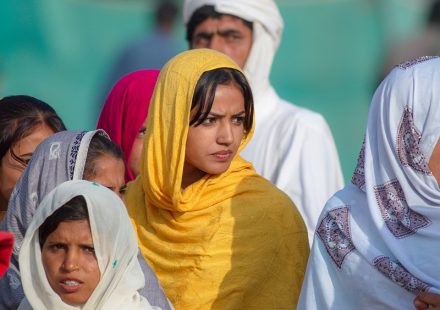
Legal Exploitation & Forced Marriage: Weaponizing Conversion in Pakistan
LAHORE, PAKISTAN — The ongoing crisis of the abduction, forced religious conversion, and predatory marriage of underage girls from religious minority communities continues to expose profound gaps in Pakistan's legal and judicial systems. Despite international pressure and domestic human rights campaigns, perpetrators consistently manipulate legal loopholes to validate the exploitation of minor children under the guise of religious conversion.
Activists and human rights defenders highlight a highly predictable, systemic pattern used by abductors to bypass child marriage restraint laws. Once a young girl—often from an impoverished Christian or Hindu family—is taken, she is rapidly transitioned through a coordinated network that strips away her legal identity and childhood protections.
The Anatomy of Institutional Failure
Human rights monitors document that the exploitation relies heavily on systemic complicity and legal maneuverings that prioritize fraudulent conversion claims over statutory age protections:
-
Document Forgery: Perpetrators routinely falsify birth records, official certificates, or school registries to inflate the child's age, falsely presenting her as a consenting adult.
-
The Shield of Conversion: Local religious institutions frequently issue conversion certificates without conducting any independent verification of the child's age, autonomy, or understanding.
-
Judicial Deference: When families seek recourse in court, judges routinely accept the abductor's falsified documentation and testimonies given under extreme duress. The legal system regularly prioritizes claims of "voluntary conversion" over established child protection statutes, such as the Child Marriage Restraint Act.
Structural Vulnerability and the Demand for Reform
This crisis does not occur in a vacuum. Entrenched socioeconomic marginalization leaves minority families uniquely vulnerable to predation. Christian and Hindu communities in Pakistan frequently face severe barriers to legal representation, police non-cooperation when filing initial reports, and retaliatory threats from abductors who often enjoy local political or religious backing.
National and international human rights organizations argue that until federal and provincial governments strictly enforce age-verification protocols and penalize the fraudulent conversion of minors, young girls will continue to face systemic exploitation under the law.
Justiceforth.org demands strict legislative reform, independent judicial oversight, and immediate state protection for vulnerable minority children facing institutionalized predation.
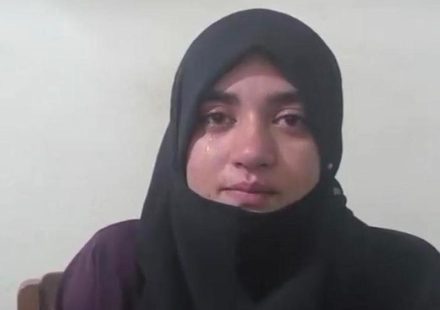
Left Behind by the Legal System: A Pakistani Christian Family’s Uphill Battle for Jeneva
FAISALABAD, PAKISTAN — The harrowing ordeal of Jeneva, a young Christian girl abducted and subjected to forced marriage and conversion, highlights the profound systemic barriers confronting religious minorities within Pakistan’s judicial and law enforcement systems. Despite clear statutory protections on paper, the practical path to justice remains a devastating uphill struggle for marginalized families.
Jeneva’s case follows a patterns human rights defenders know all too well. Plucked from her community by a predatory actor, she was quickly subjected to a forced marriage designed to legally shield her abductor from kidnapping charges. When her family attempted to intervene, they were met with institutional apathy, bureaucratic delays, and overt hostility from local authorities.
A Fractured Legal Framework
The core impediment to justice in Jeneva’s case lies in the systemic failure of local law enforcement and the judiciary to enforce existing child protection and anti-abduction laws. Rights advocates point to several critical failure points:
Police Non-Cooperation: Initial First Information Reports (FIRs) filed by minority families are frequently delayed, minimized, or outright rejected by local police, giving abductors ample time to move the victim and falsify legal documents.
The Duress Factor: When victims are brought before a magistrate, they are often flanked by their captors and subjected to intense intimidation, leading them to give coerced statements. Courts routinely accept these statements at face value without ensuring the victim is in a safe, neutral environment.
Institutional Bias: Lower courts frequently prioritize religious sentiments over statutory penal codes, effectively validating an abduction if a conversion certificate is presented.
The Human Cost of Accountability
For Jeneva’s family, the fight for her return has brought not only emotional devastation but immense financial and physical peril. To sustain a prolonged legal battle in Pakistan, minority families must navigate exorbitant legal fees, lost wages, and continuous security threats from the perpetrator’s local supporters.
Local civil society organizations are standing alongside the family, providing legal aid and security advocacy. However, they emphasize that temporary fixes cannot replace systemic overhauls. True justice for Jeneva, and countless young girls like her, requires the state to fiercely protect judicial independence and penalize the weaponization of religion to mask criminal behavior.
Justiceforth.org remains committed to tracking Jeneva’s case, amplifying her family's voice, and demanding institutional accountability from Pakistan's legal apparatus.

The Cost of Systematic Delay: The Unresolved Legal Warfare in Huma Younus’s Abduction Case
KARACHI, PAKISTAN — The ongoing legal battle of Huma Younus, a Christian girl who was abducted, forcibly converted, and subjected to a predatory marriage at just 14 years old, stands as a devastating symbol of institutional paralysis within the Pakistani judiciary. Nearly seven years after her initial abduction, her family continues to face a labyrinth of legal delays, structural bias, and physical intimidation as they fight for her basic freedom.
Huma’s case remains one of the most high-profile human rights struggles in the region. It highlights how local courts routinely fail to protect minority children by prioritizing fraudulent religious documentation over statutory age-consent and child protection laws.
A Chronology of Institutional Failure
The tragedy of Huma Younus is defined by a timeline of delayed hearings, missing files, and judicial reluctance to challenge local societal pressures:
October 2019 — The Abduction: At 14 years old, Huma is taken from her family home in Karachi by an adult perpetrator. She is quickly moved across provincial lines, forced into a marriage, and declared a religious convert to shield the captor from kidnapping charges.
February 2020 — The Sindh High Court Ruling: In a decision that shocked national and international human rights monitors, the Sindh High Court ruled that under certain interpretations of customary law, a marriage to an underage girl is considered valid if she has entered puberty, completely disregarding the provincial Sindh Child Marriage Restraint Act, which legally sets the marriage age at 18.
2021–2025 — Extracted Legal Stall tactics: The family's legal counsel successfully moves the case toward the Supreme Court of Pakistan. However, hearings are repeatedly postponed, scheduled judges recuse themselves, and local police consistently fail to produce the victim in court to verify her autonomy or psychological well-being.
The Intersect of Coercion and State Inaction
Rights defenders emphasize that the legal strategy used by abductors relies heavily on time. By stalling court proceedings for years, perpetrators subject young victims to continuous, isolated psychological conditioning and duress. By the time a case finally reaches a senior bench, the child has often borne children under duress, making a safe extraction exponentially more complex.
Furthermore, Huma’s parents, Nagina and Younus Masih, have faced severe, targeted safety threats for refusing to drop the charges. They have been forced to relocate multiple times, lost their livelihoods, and endured public harassment from local networks supporting the perpetrator.
International Outrage and Advocacy
Because of the severe breakdowns in local justice, international human rights bodies have consistently elevated Huma’s case to global diplomatic forums. Organizations like Aid to the Church in Need (ACN) and various United Nations human rights rapporteurs have repeatedly petitioned the Pakistani federal government to enforce its own constitutional mandates regarding child safety and equal citizenship.
Legal experts standing with Justiceforth.org argue that Huma’s case is not an isolated anomaly; it is a structural template. Until the Supreme Court establishes a definitive precedent ruling that statutory child protection laws strictly supersede fraudulent conversion claims, thousands of young girls from vulnerable minority backgrounds remain structurally unprotected.
Justiceforth.org demands that the Supreme Court of Pakistan immediately expedite Huma Younus’s case, guarantee her physical and psychological safety in a neutral environment, and hold the perpetrators of child exploitation fully accountable under the law.
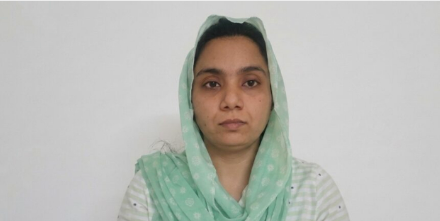
How Blasphemy Accusations Are Used for Personal Revenge
In Pakistan, blasphemy laws are often used for the wrong reasons. Instead of protecting religion, people frequently use them as a weapon to settle personal scores, scare others, or get revenge. This is especially true for religious minorities, who are often targeted when they stand up for themselves or refuse to do what someone else wants.
A tragic example of this is the incident of Ms. Sumera, a Christian nurse whose life was completely turned upside down by a false accusation of blasphemy.
According to Ms. Sumera, the lies told about her had nothing to do with religion. They were actually the acts of a jealous coworker whose pride was hurt. Ms. Sumera worked hard for six years as a nurse at Bahria International Hospital in Rawalpindi. She was the only Christian nurse in her department, but she always focused on doing her job professionally.
However, things got difficult when her hard work was rewarded, Ms. Sumera stated that after she finished her nursing degree, the hospital administration promoted her. This promotion placed her in a higher position than her male colleague, Muhammad Usman
Usman was deeply angry and jealous about her promotion. Ms. Sumera stated that he started spreading nasty rumors about her in the hospital ward. He went around telling people that she wasn't good at her job and that she was doing a terrible job managing her team
Ms. Sumera stated that she spoke to their boss and explained that Usman was lying because he was jealous When the boss realized that Usman had fabricated the claims, he gave him a final warning: if Usman lied again, he would be fired on the spot
The situation became dangerous on the evening of Friday, September 27, 2024. Ms. Sumera stated that around 9:00 p.m., just as she finished her shift and was heading to her hostel, Usman trapped her near the restroom
He grabbed her by force and tried to rape her, but she hit him on the hand with a pen and went to her hostel Ms. Sumera stated that only thirty minutes later, she got a call from a coworker warning her to run. Usman was already rallying an angry crowd. He was telling everyone that she had insulted the Prophet Muhammad and incited the hospital staff to attack her hostel
To save her life, Ms. Sumera had to escape in a taxi and take a night bus to Lahore On September 28, 2024, he lodged a false FIR and got others to issue a religious decree against her. The danger followed her to Lahore. Ms. Sumera stated that when she got home and told her family what happened, that same evening a huge, angry crowd gathered outside their house, chanting threats to kill her. To escape, the family had to sneak out through a neighbor's house. They ran to an uncle's house in Sheikhupura and stayed hidden there for ten days.
Eventually, a local church and we (Justice Forth Org), a human rights organization, stepped in to find a safe way out. Ms. Sumera's case shows how easily religious laws can be used to punish a woman who simply was doing her job and did well in her career.
Justice Forth is calling on international human rights groups and refugee organizations to support Ms. Sumera and her family. We will continue to stand with survivors of false accusations and fight for those who are targeted by the misuse of these laws